


Peroxisome
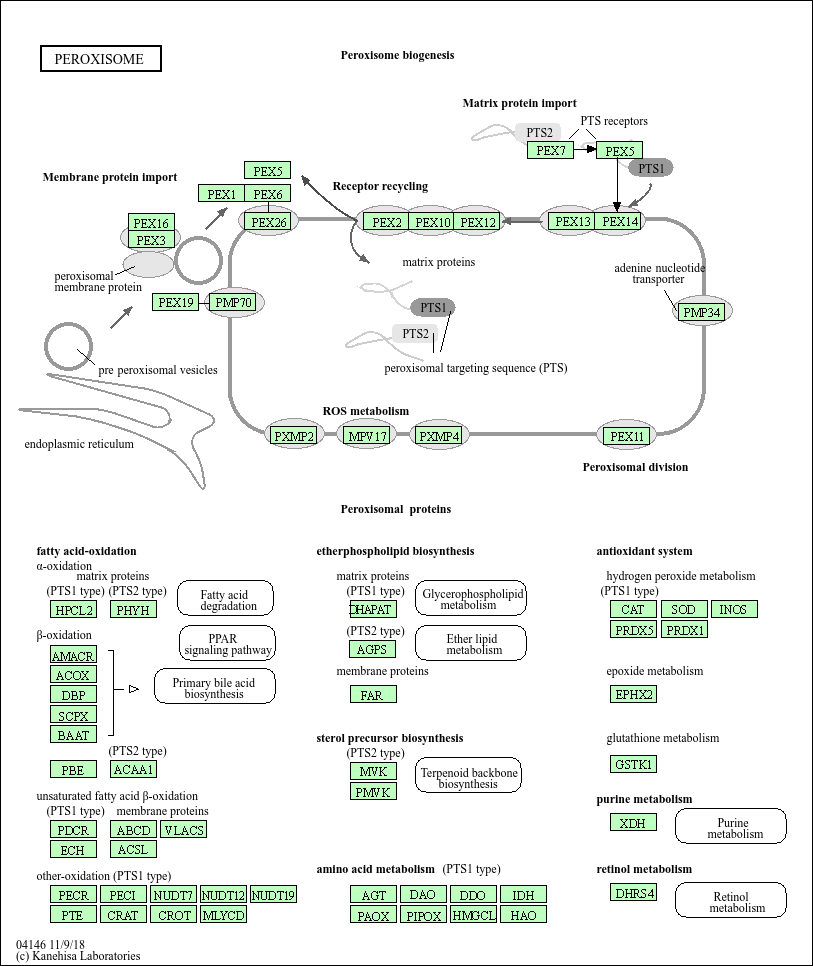
Core of basic research: Clarifies the molecular mechanism by which peroxisomes participate in lipid metabolism and oxidative stress defense, key organelles maintaining cellular metabolic homeostasis. Peroxisomes are membrane-bound organelles containing characteristic enzymes; core functions include: Degrading very-long-chain fatty acids, branched-chain fatty acids, and bile acid precursors via fatty acid β-oxidation; decomposing hydrogen peroxide (H₂O₂) produced during metabolism via catalase (CAT) to avoid oxidative damage; participating in the biosynthesis of cholesterol and isoprenoids. Their biogenesis depends on peroxins (PEX) family proteins, regulating peroxisomal membrane assembly, enzyme import, and organelle division. Research focuses include peroxisomal biogenesis mechanisms, enzymatic regulatory networks of lipid metabolism, molecular logic of oxidative stress defense, metabolic cooperation between peroxisomes and mitochondria/endoplasmic reticulum, and the association of pathway abnormalities with peroxisomal disorders (PEX gene mutations) and metabolic syndrome (impaired lipid degradation).
Core key proteins: Catalase (CAT, decomposing H₂O₂), fatty acid β-oxidases (ACOX1, ABCD1, SCPx), peroxisomal biogenesis proteins (PEX3, PEX5, PEX19, regulating membrane assembly and enzyme import), peroxisomal membrane proteins (PMP70, ABCD2), acyl-CoA synthetase (ACS), isoprenoid synthase (FPPS), superoxide dismutase (SOD, synergistic antioxidant).
Core key proteins: Catalase (CAT, decomposing H₂O₂), fatty acid β-oxidases (ACOX1, ABCD1, SCPx), peroxisomal biogenesis proteins (PEX3, PEX5, PEX19, regulating membrane assembly and enzyme import), peroxisomal membrane proteins (PMP70, ABCD2), acyl-CoA synthetase (ACS), isoprenoid synthase (FPPS), superoxide dismutase (SOD, synergistic antioxidant).
Product list
-
{{item.title}}{{item.react}}{{item.applicat}}
Product list
Product name
Reactivity
Application
Related Resource Links


Related Promotional Journal Downloads


Explore Our Recommended Popular Products
More products

30,000+ high- quality products available online
Primary Antibodies, Secondary Antibodies, mIHC Kits, ELISA Kits, Proteins, Molecular Biology Products,Cell Lines,Reagents ...
Contact Us
-

400-801-6722
-

support@lamarck.cn
-


Order
-

Message