


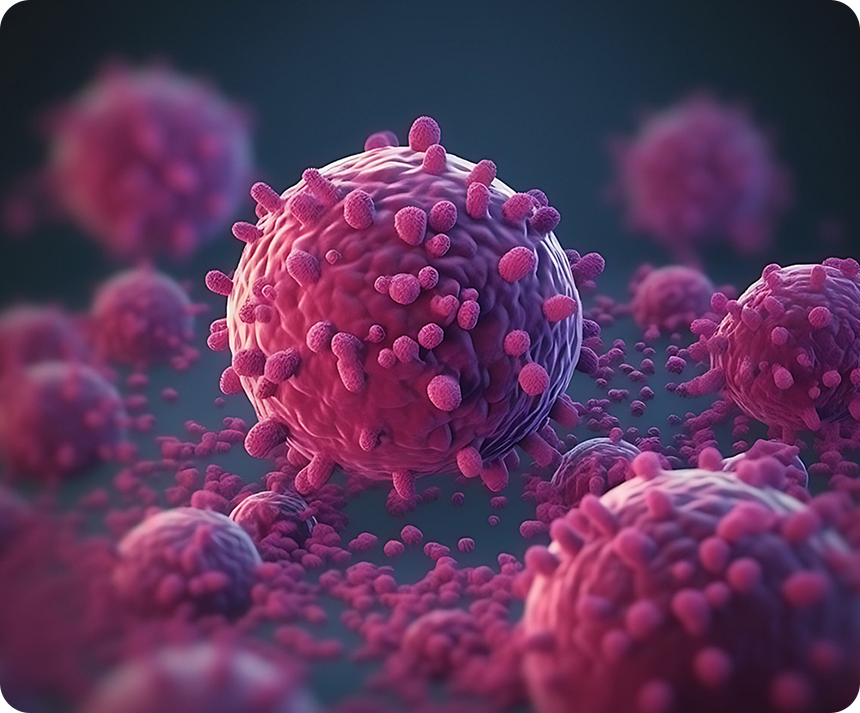
Basic research on fibrosis focuses on the molecular mechanisms of abnormal tissue repair after injury. Its core is to decipher the regulatory network of fibroblast activation and excessive extracellular matrix (ECM) deposition, providing theoretical support for targeted therapy of organ fibrosis (e.g., lung, liver, heart, kidney). Recent advances concentrate on core regulatory pathways, cell-cell interactions, and novel intervention targets.
Fibroblasts are core effector cells in fibrosis, with abnormal activation (transdifferentiation into myofibroblasts) as a key step. The transforming growth factor-β (TGF-β)/Smad pathway is a classic regulatory axis: TGF-β induces fibroblasts to secrete collagen. Recent studies show Smad7 methylation enhances this pathway activity, acting as an "accelerator" for fibrosis progression.
Metabolic reprogramming is a new activation feature—myofibroblasts rely on glycolysis for energy. Targeting key glycolytic enzymes (e.g., hexokinase 2) inhibits their proliferation and collagen synthesis.
Excessive ECM accumulation causes tissue sclerosis, and abnormal ECM composition/structure exacerbates injury.
Imbalance between matrix metalloproteinases (MMPs) and tissue inhibitors of metalloproteinases (TIMPs) is critical: overexpressed TIMPs inhibit ECM degradation. Recent findings confirm MMP-14 alleviates liver fibrosis by degrading fibronectin.
Collagen cross-linking modification (e.g., mediated by lysyl oxidase) enhances ECM stability, making related enzymes important intervention targets.
The immune system acts as a "bridge" in fibrosis, with cytokines secreted by immune cells regulating fibroblast function. Imbalanced macrophage subsets are key: M2 macrophages secrete IL-13 and IL-4 to promote fibroblast activation, while γδT cells secrete IFN-γ to inhibit fibrosis.
Neutrophil extracellular traps (NETs) released by neutrophils induce fibroblast activation via TLR4 pathway activation—a mechanism validated in pulmonary fibrosis.
Epigenetic modifications participate in reversible fibrosis regulation, offering new therapeutic dimensions.
Histone deacetylases (HDACs) silence anti-fibrotic genes; HDAC6 inhibitors have shown efficacy in alleviating renal fibrosis in animal experiments.
MicroRNAs (e.g., miR-29, miR-146a) regulate fibrosis by targeting TGF-β receptors or collagen genes, with miR-29 mimics entering preclinical research.
Pulmonary fibrosis: Epithelial-mesenchymal transition (EMT), NET formation mechanisms, and STING pathway-mediated inflammation-fibrosis crosstalk.
Hepatic fibrosis: Metabolic regulation of hepatic stellate cell activation, and effects of gut microbiota metabolites (e.g., bile acids) on hepatic fibrosis.
Myocardial fibrosis: Molecules such as FBLN7 and USP53 (consistent with previous cardiovascular research) and their roles in regulating myocardial ECM deposition.
Renal fibrosis: Crosstalk between podocyte injury and fibroblasts, and regulatory effects of hypoxia-inducible factor (HIF) pathway.
Related Resource Links



Related Promotional Journal Downloads


Explore Our Recommended Popular Products
More products

30,000+ high- quality products available online
Primary Antibodies, Secondary Antibodies, mIHC Kits, ELISA Kits, Proteins, Molecular Biology Products,Cell Lines,Reagents ...
Contact Us
-

400-801-6722
-

support@lamarck.cn
-


Order
-

Message