


Gap junction
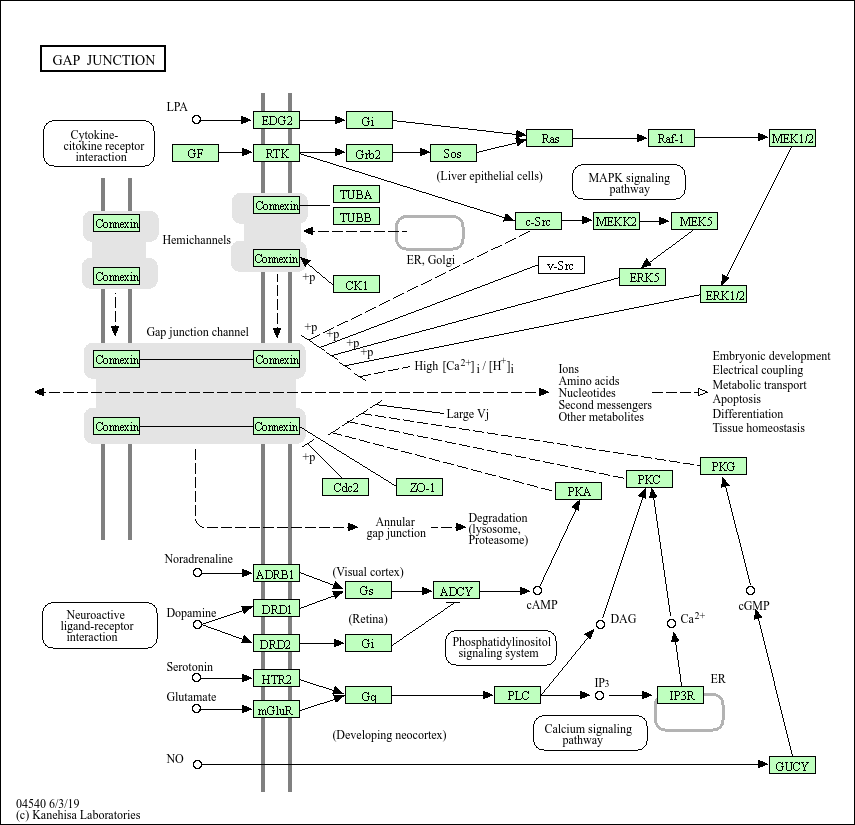
Core of basic research: Clarifies the molecular mechanism by which gap junctions mediate direct intercellular communication of small molecules and electrical signals, key for coordinating synchronous tissue function. The core structure is the Connexon: Each connexon consists of 6 Connexin subunits; connexons from adjacent cells dock to form cytoplasm-permeable channels, allowing rapid transmission of ions (Ca²⁺, K⁺), second messengers (cAMP, IP3), and other small molecules (<1 kDa). This pathway regulates physiological processes such as synchronized myocardial contraction, neural signal transduction, and metabolite sharing. Research focuses include the subtype specificity of connexins, channel gating regulation (phosphorylation, pH-dependent), cross-talk between gap junctions and signaling pathways, and the association of pathway abnormalities with arrhythmias, neurodegenerative diseases, and tumor heterogeneity.
Core key proteins: Connexin family (Cx43, Cx32, Cx40, etc.), Connexon, Calmodulin (CaM, regulating channel activity), protein kinases (PKA, PKC, mediating Connexin phosphorylation), ions (Ca²⁺, K⁺), second messengers (cAMP, IP3), cardiomyocytes/neurons/epithelial cells (cell types with high gap junction expression).
Core key proteins: Connexin family (Cx43, Cx32, Cx40, etc.), Connexon, Calmodulin (CaM, regulating channel activity), protein kinases (PKA, PKC, mediating Connexin phosphorylation), ions (Ca²⁺, K⁺), second messengers (cAMP, IP3), cardiomyocytes/neurons/epithelial cells (cell types with high gap junction expression).
Product list
-
{{item.title}}{{item.react}}{{item.applicat}}
Product list
Product name
Reactivity
Application
Related Resource Links



Related Promotional Journal Downloads


Explore Our Recommended Popular Products
More products

30,000+ high- quality products available online
Primary Antibodies, Secondary Antibodies, mIHC Kits, ELISA Kits, Proteins, Molecular Biology Products,Cell Lines,Reagents ...
Contact Us
-

400-801-6722
-

support@lamarck.cn
-


Order
-

Message