


PI3K-Akt signaling pathway
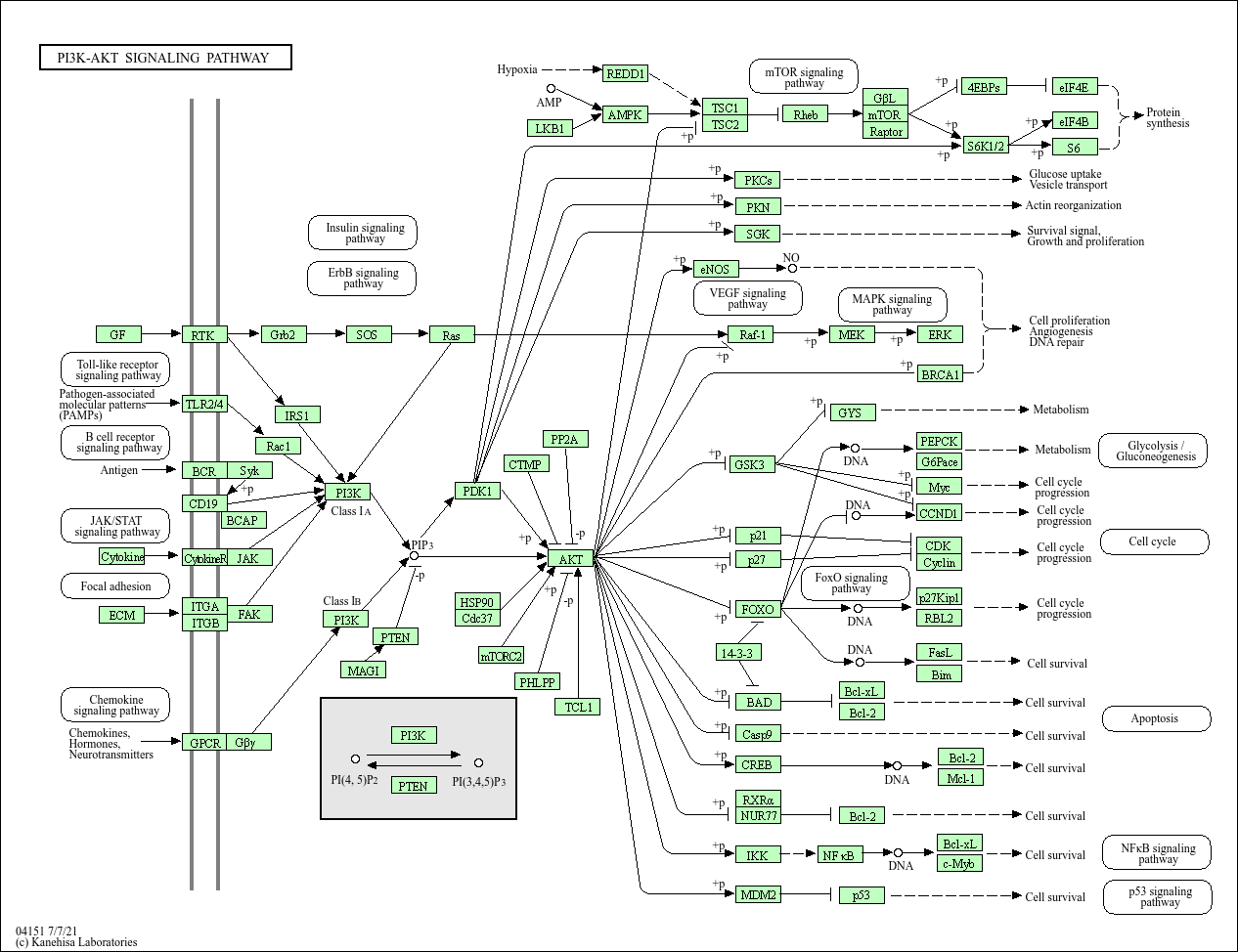
A key pathway mediating growth factor, cytokine, and adhesion signals, playing a core role in cell survival and proliferation. Upon growth factor binding to the receptor, PI3K is activated to catalyze the phosphorylation of phosphatidylinositol (PI) to generate PIP3, which recruits Akt and PDK1 to the cell membrane; PDK1 phosphorylates and activates Akt. Activated Akt exerts its functions by phosphorylating downstream substrates: inhibiting pro-apoptotic molecules such as Bad and Caspase-9 to promote cell survival; activating mTOR and GSK3β to promote cell proliferation and metabolism; regulating the NF-κB pathway to enhance cell stress resistance. PTEN is a core negative regulator of the pathway, capable of degrading PIP3. Abnormal activation of the pathway (e.g., PI3K mutations, PTEN deficiency) is one of the most common molecular events in human tumors, closely associated with lung cancer, breast cancer, prostate cancer, etc. Various PI3K and Akt inhibitors have entered clinical applications.
Core function: Mediate growth factor signals to promote cell proliferation, survival, metabolism, and migration; abnormal activation is closely associated with tumorigenesis. Key regulatory molecules: PI3K, Akt1/2/3, PTEN, mTOR, GSK3β.
Core function: Mediate growth factor signals to promote cell proliferation, survival, metabolism, and migration; abnormal activation is closely associated with tumorigenesis. Key regulatory molecules: PI3K, Akt1/2/3, PTEN, mTOR, GSK3β.
Product list
-
{{item.title}}{{item.react}}{{item.applicat}}
Product list
Product name
Reactivity
Application
Related Resource Links



Related Promotional Journal Downloads


Explore Our Recommended Popular Products
More products
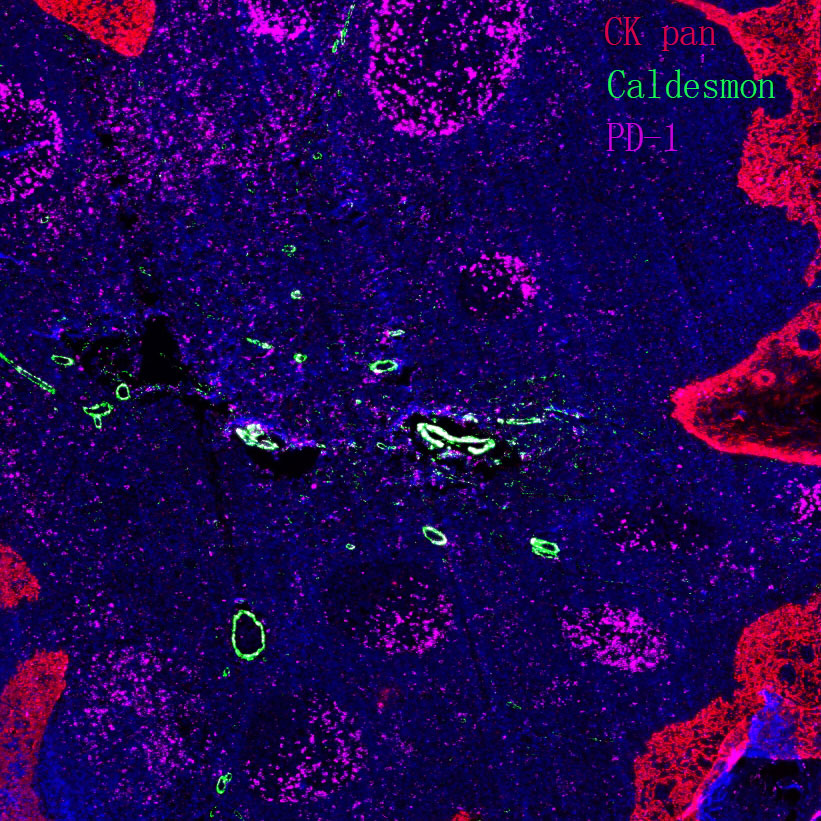

30,000+ high- quality products available online
Primary Antibodies, Secondary Antibodies, mIHC Kits, ELISA Kits, Proteins, Molecular Biology Products,Cell Lines,Reagents ...
Contact Us
-

400-801-6722
-

support@lamarck.cn
-


Order
-

Message