


Ras signaling pathway
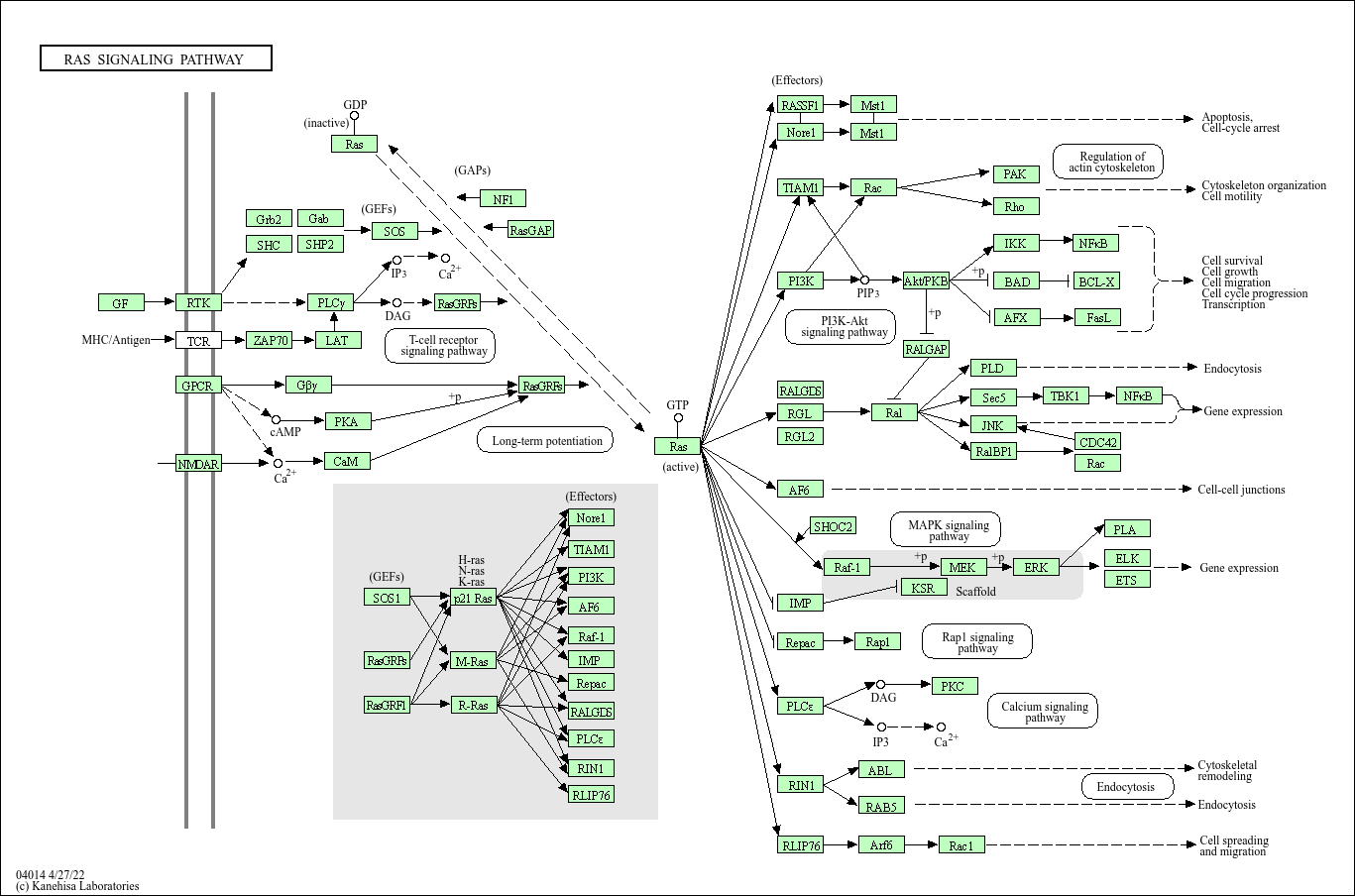
A signal transduction pathway centered on Ras family small GTPases (H-Ras, K-Ras, N-Ras), serving as a key link connecting receptor tyrosine kinases (RTK) to downstream effector pathways. Ras proteins act as signal "switches" by binding to GTP (active state) or GDP (inactive state); GEF (guanine nucleotide exchange factor) promotes the formation of Ras-GTP, while GAP (GTPase-activating protein) promotes GTP hydrolysis to inactivate Ras. Activated Ras recruits downstream kinases (e.g., Raf, PI3K), activating pathways such as MAPK and PI3K-Akt to regulate cell proliferation, differentiation, migration, and survival. Ras gene mutations (e.g., K-Ras G12D) can lead to its sustained activation, driving tumorigenesis, and it is one of the most common driver mutations in tumors such as pancreatic cancer, colorectal cancer, and lung cancer. Drugs targeting mutant Ras have gradually entered clinical practice.
Core function: Act as a signal "switch" to mediate growth factor receptor signals, activating downstream MAPK and PI3K-Akt pathways to regulate proliferation and differentiation. Key regulatory molecules: H-Ras/K-Ras/N-Ras, Raf, MEK, ERK, GAPs, GEFs.
Core function: Act as a signal "switch" to mediate growth factor receptor signals, activating downstream MAPK and PI3K-Akt pathways to regulate proliferation and differentiation. Key regulatory molecules: H-Ras/K-Ras/N-Ras, Raf, MEK, ERK, GAPs, GEFs.
Product list
-
{{item.title}}{{item.react}}{{item.applicat}}
Product list
Product name
Reactivity
Application
Related Resource Links


Related Promotional Journal Downloads


Explore Our Recommended Popular Products
More products
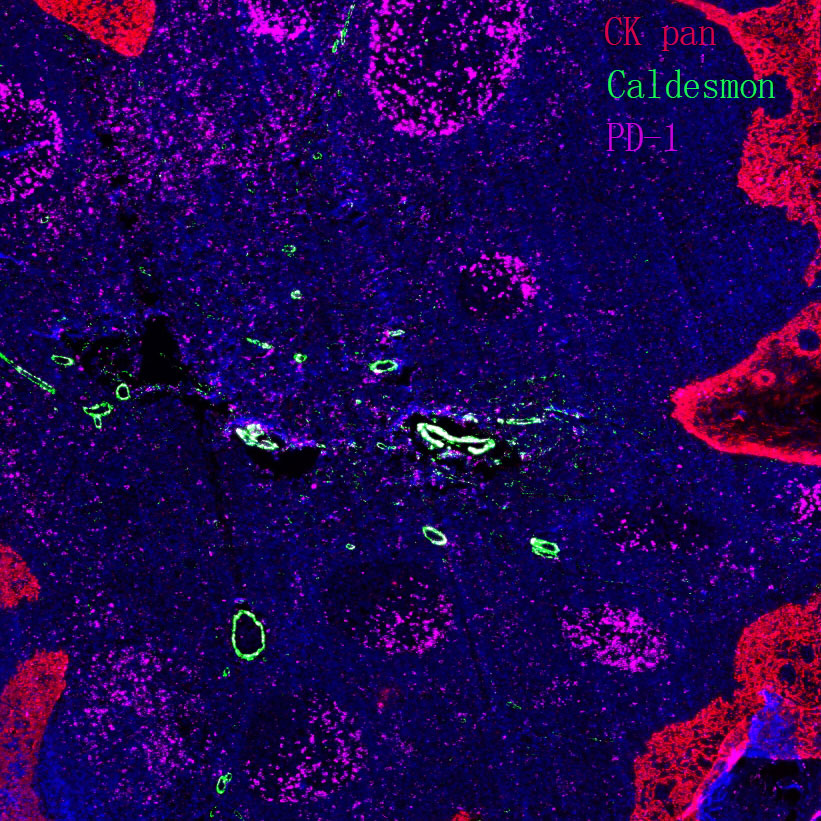

30,000+ high- quality products available online
Primary Antibodies, Secondary Antibodies, mIHC Kits, ELISA Kits, Proteins, Molecular Biology Products,Cell Lines,Reagents ...
Contact Us
-

400-801-6722
-

support@lamarck.cn
-


Order
-

Message